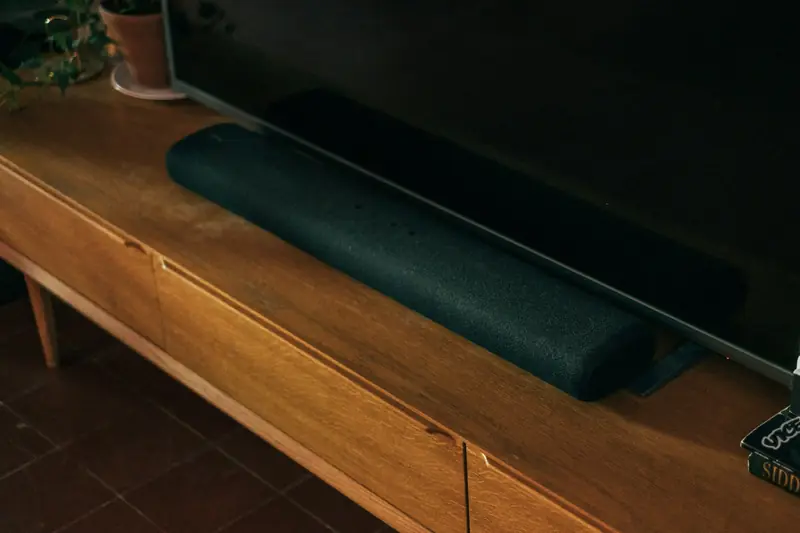
Best Soundbars for TV
A soundbar fixes the thin sound and muddy dialogue of most flat TVs. The decisions that matter are how many channels you need, whether you want Dolby Atmos and which HDMI port your TV offers. This page is for TV viewers who want clearer speech and bigger sound without a full speaker system.
Jump to section
What we look for
Channels and Dolby Atmos
more channels spread sound, and Atmos adds height.
HDMI eARC
the HDMI port decides how the soundbar connects to your TV.
Dialogue enhancement
a voice mode and a center channel give speech its own focus.
Subwoofer included
a subwoofer adds the low end a small bar cannot.
Room size
a bar should suit the room you watch in.
App and streaming
streaming support and an app add features for music.
How to choose the right soundbar
Soundbars range from simple single bars to systems with a separate sub and rear speakers. Start with your TV's ports, then decide how much sound you want in the room. If you are weighing a soundbar against speakers, compare powered bookshelf speakers, and use our speaker placement guide for setup.
Channels and Dolby Atmos
Check the channels column and whether the bar supports Dolby Atmos. Atmos adds a height layer, and Dolby describes two ways to get it: ceiling speakers that fire down, and up-firing speakers that bounce sound off the ceiling (Dolby). A bar with up-firing drivers uses the second method, so read the maker's manual to see how it expects your ceiling to behave. A bar without Atmos can still suit you if your main goal is clearer speech.
HDMI eARC
The HDMI port decides how the bar and the TV talk to each other. Look on your TV for a port marked ARC or eARC, then check the HDMI eARC column for each bar. When both sides match, one cable carries sound from the TV to the bar. If your TV lacks the port, check the inputs column for an optical input instead, and read both manuals so you know which connection each device expects.
Dialogue enhancement
Look for a dialogue or voice mode in the maker's description, and for a dedicated center channel that gives speech its own speaker. Dolby says the center speaker should sit just below or above the TV, so the sound comes directly at you (Dolby), so check that the shape of the bar lets it sit in that spot on your stand.
Subwoofer included
Check whether a subwoofer is included and whether it is wireless, using the subwoofer column. A wireless sub is easier to place because it needs power but no long cable to the bar. Some bars skip the sub to save space and cost. That can work in a bedroom, but low notes may sound thin in a bigger living room.
Room size
Match the bar to the room and the TV. The width column tells you whether it fits your stand and the space under the screen. A compact bar can suit a small room, while a larger room may call for more channels or a sub. The rear speakers column shows whether you can add surrounds later, which matters if you plan to build the system over time.
App and streaming
Check for Wi-Fi or Bluetooth streaming, and whether the bar has an app for settings. Bluetooth is convenient, but not lossless (Apple).
Tips for using your soundbar
- Check your TV's HDMI ports before you shop. Look for ARC or eARC.
- Put the bar just below or above the TV so the sound comes directly at you. See speaker placement.
- For music as well as TV, compare bookshelf speakers.
- Check whether rear speakers can be added later if you may upgrade. Read the port labels in both manuals before you order, so you know which cable connects the bar to the TV.
FAQ
Where should it go?
Put the center channel just below or above the TV. Dolby's advice is that this placement lets the sound come straight at you (Dolby).
How does Atmos add height?
Atmos height comes from two designs, as Dolby describes them: ceiling speakers that fire downward, and up-firing speakers that bounce sound off the ceiling (Dolby).
Do I need eARC?
You need a matching connection. Look for an HDMI ARC or eARC port on your TV, then compare it with the HDMI column for each soundbar.
Dialogue hard to hear?
Choose a bar with a voice or dialogue mode and a dedicated center channel, so speech has its own speaker.
Related
-
Buying guide
Best Powered Bookshelf Speakers
Amp power, inputs, phono preamp, HDMI ARC and Bluetooth, side by side.
-
Buying guide
Best Bookshelf Speakers
Passive or powered, woofer, sensitivity, impedance, ports and size, side by side.
-

Buying guide
Best Turntables for Beginners
Preamp, tonearm adjustments, cartridge, drive and outputs, side by side.
-

Comparison
Active vs Passive Speakers: Which Is Right for You?
A built-in amp for simplicity, or separate parts to upgrade.
-
Guide
Speaker Placement Guide: Better Sound Without Spending More
The triangle, wall distances, ear height and toe-in, from KEF and Dolby.
Get the Overtone Setup Card
A printable card with the steps for setting up a turntable and placing speakers, plus one hearing-safety reminder. Free, and sized for a shelf or a wall.